Behind the 3D Avatar: Why Visual Identification Boosts Your Child's Engagement
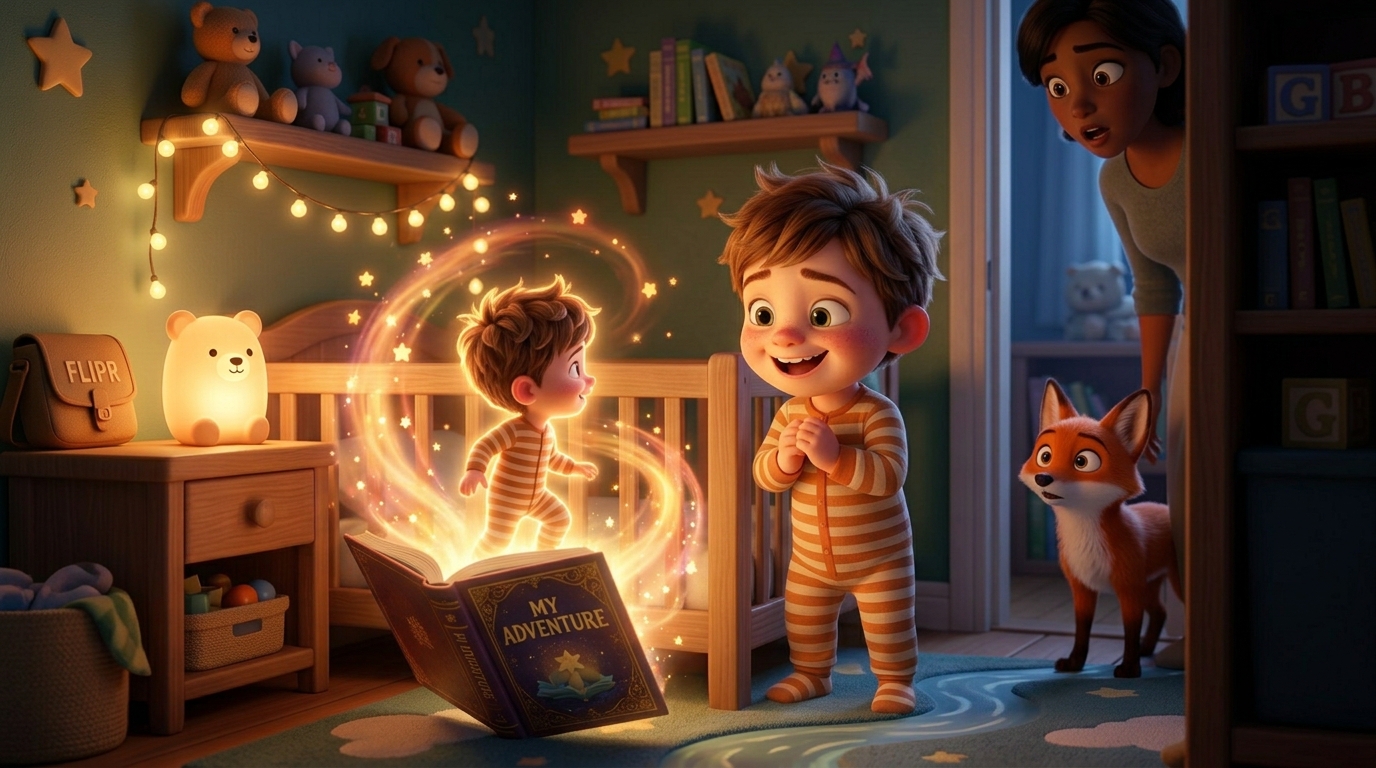
The ability to identify with characters is a key factor for immersion and understanding. With Flipr, we have taken this a step further by letting children create their own Pixar-style 3D avatar.
Visual identification boosts a child's engagement because it activates the brain's self-referencing effect and makes the story personally relevant. When a child sees themselves as a 3D avatar in Flipr, it strengthens motivation, learning, and the sense of mastery, as the child transforms from a passive listener to the story's active hero.
Why is identification crucial for children's engagement in stories?
Psychological research shows that children have a strong tendency to identify with characters who look like them. This identification is crucial for:
- Engagement: When the child sees themselves in the story, it instantly becomes more relevant and exciting.
- Empathy: Experiencing the story through the eyes of a character who resembles oneself strengthens empathy.
- Learning: Information linked to one's own person is remembered better – the so-called "self-referencing effect".
- Mastery: When the child's avatar overcomes challenges, it gives the child a sense of mastery.
How does the Flipr 3D avatar work as an educational tool?
- Visual representation: The child sees themselves directly as the main character by choosing hair color, clothes, skin tone, and more.
- Enhanced "self-referencing effect": All events and learning points become directly related to the child themselves.
- Exploratory play: The process of creating the avatar is a playful activity in itself.
- Inclusion and diversity: The ability to create avatars that reflect a wide range of appearances.
- Motivation to read: Strong identification increases the motivation to read.
How does involving family and friends strengthen the child's joy of reading?
- Social Co-creation: Children can create stories together with friends, where their avatars appear side by side.
- Family bonds: Seeing family and pets as part of the adventure creates security and community.
- Relevance and recognizability: Stories become even more relevant with familiar faces.
Children react particularly strongly when they hear their own name in a story — it activates the brain's selective attention and shifts the child from passive listening to active participation.
Why are personalized adventures a shortcut to greater reading pleasure?
Flipr's 3D avatars are a thoughtful educational feature that utilizes the principles of visual identification to create a deeply engaging reading experience. By letting your child be the hero of their own adventures, Flipr opens a portal to a world of discovery, mastery, and endless joy. Also read our article on why children love reading about themselves to understand the scientific explanation for the power of personalization.
Why is it important that my child can create their own avatar in Flipr?
Creating a personal 3D avatar significantly increases the child's engagement and identification with the story via the so-called 'self-referencing effect'.
Can my child include friends and family as avatars?
Yes! Flipr makes it possible to create avatars of friends, family, and pets who can participate in the stories.
How does the 3D avatar contribute to the joy of reading?
Strong visual identification and personal ownership of the story increase the motivation to read. When the child is the hero, reading feels like an exciting adventure.
Is the 3D avatar just for fun, or does it have an educational function?
The 3D avatar is a central part of Flipr's educational design, utilizing psychological principles of identification and the 'self-referencing effect'.
Is it difficult to create an avatar in Flipr?
No, it is designed to be intuitive and fun for children with a user-friendly interface. Read our guide on [how to create your family's avatars](/blog/opret-familie-avatarer).
Create your own 3D avatar
Reference: Bandura, A. (1977). Social learning theory. | Rogers, T. B., et al. (1977). Self-reference and the encoding of personal information.
Read also
- Why children love hearing their own name in a story
- How to Create Your Family’s Avatars in Flipr
- Why children love reading about themselves — the science behind it
- Social Co-creation: Strengthening Friendships and Empathy Through Shared Storytelling
- From 0 to 100 Words: How Personalized Stories Boost Your Child's Vocabulary
- Why imagination is a superpower for children (and how stories train it)