Why children love reading about themselves — the science behind it
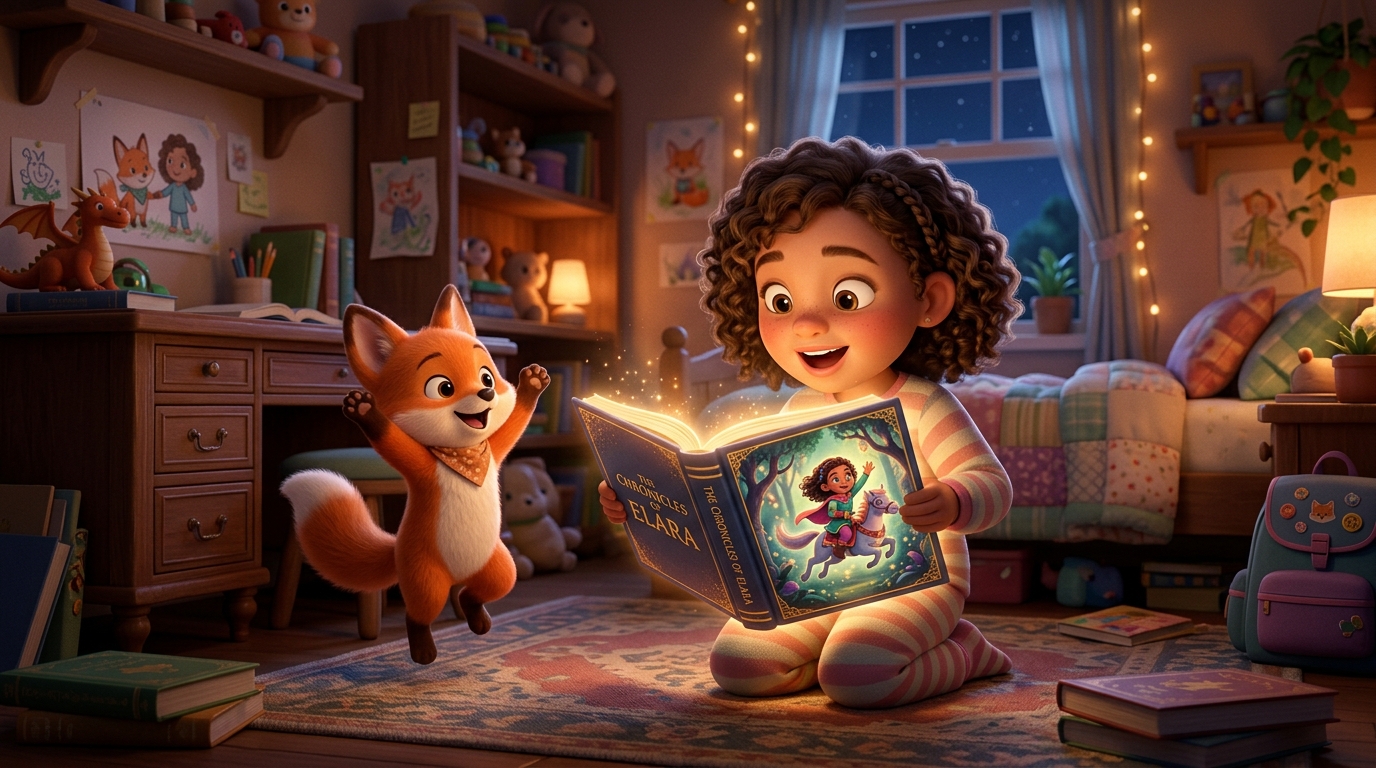
Your child is sitting with a book. Their eyes move across the pages. Suddenly, they stop. A smile grows. “Look Mom,” they say, “it's me!” It's no coincidence that children love reading about themselves. There is deep science behind it — and parents who understand this can give their children a massive advantage.
Children love reading about themselves because the brain prioritizes information related to the self through what is known as the self-referencing effect. When the child is the protagonist, the memory and emotional centers are activated more intensely, making the story more relevant. This increases reading motivation, concentration, and the child's ability to mirror themselves in positive traits.
What is the self-referencing effect and how does it work?
Research within cognitive psychology has identified something astonishing: when information relates to ourselves, we remember it better. Much better.
Rogers, Kuiper, and Kirker documented in 1977 that words judged in relation to the self were recalled twice as often as words judged by semantic meaning. This phenomenon — known as the self-referencing effect — has since been replicated hundreds of times.
What does this mean for your child? When they read a story where they are the hero, a special memory code is activated in the brain. The information isn't just stored — it is integrated into the child's self-image.
Also read our article on how personalized stories boost your child's vocabulary.
Why does the child's brain react more strongly to personalized stories?
The hippocampus (the memory center) becomes more active. The amygdala (the emotional center) registers that this is important. And the prefrontal cortex (the conscious processor) connects the story with existing experiences.
Result: the story is remembered better, understood more deeply, and experienced more intensely. Research shows that children react particularly strongly when they hear their own name — and the same applies when they read about themselves.
How do personalized narratives affect the child's self-understanding?
Narrative psychology — the study of how stories shape our self-understanding — shows that the tales we repeat to ourselves become self-fulfilling prophecies.
A child who reads about themselves being brave begins to see themselves as brave. A child who reads about themselves being curious begins to ask more questions. This isn't just imagination — it is documented in several studies that narrative identity directly influences behavior and self-perception.
Why do personalized stories give children a greater desire to read?
Relevance
Children constantly ask the same question: “What does this have to do with me?” When the answer is obvious — because the story is literally about them — the resistance disappears.
Ownership
When the child is the hero, they are not a passive recipient. They are an active participant. Reading shifts from “something I have to do” to “something that is about me.”
A sense of success
Personalized stories can be tailored exactly to the child's reading level. They read something they understand — and feel capable. This sense of mastery is crucial for rediscovering the joy of reading.
Predictability without boredom
The child knows the character (themselves) but not the plot. This creates the ideal balance between security and excitement.
How can I use Flipr and other methods to personalize reading?
Improvise with names
Next time you read a bedtime story, replace the protagonist's name with your child's. It is the simplest form of personalization — and it works.
Let the child choose the setting
“Where should the story take place?” An answer gives the child ownership — even if you improvise the rest yourself.
Involve friends and family
Ask the child to choose who else should be in the story. The names don't have to be realistic — they just need to be meaningful to the child.
Use technology when time is tight
Personalized stories take time to write. Apps like Flipr do it in seconds — and add illustrations, sounds, and interactive choices that make the experience even stronger. Also read our guide on how to raise a child who loves to read.
What are the key benefits of a child reading about themselves?
Children love reading about themselves because the brain is built to prioritize information that relates to the self. It isn't selfishness — it's neuroscience. And parents who utilize this give their children not just better reading skills, but also a stronger self-image.
Try Flipr for free and let your child read their own story
What is the self-referencing effect?
The self-referencing effect is a cognitive psychological phenomenon describing how we remember information better when it relates to ourselves. Research shows that words judged in relation to the self are recalled twice as often as other words.
Why do children read better when the story is about them?
When children read about themselves, the brain's self-referential memory system is activated. This makes the information more meaningful, easier to remember, and deeper to understand. At the same time, motivation increases because reading feels relevant.
Can personalized stories strengthen a child's self-confidence?
Yes. Narrative psychology shows that the stories we tell about ourselves shape our self-understanding. When a child reads about themselves being brave, curious, and competent, these traits are gradually internalized as part of the child's identity.
Is it difficult to write personalized stories yourself?
It doesn't have to be complicated. Even small changes — like using the child's name, letting them choose the setting, or involving friends — make a big difference. Apps like Flipr can also generate fully personalized stories in seconds with illustrations and interactive choices.
Let your child read their own story
Reference: Rogers, T. B., Kuiper, N. A., & Kirker, W. S. (1977). Self-reference and the encoding of personal information. Journal of Personality and Social Psychology. | McLean, K. C., & Pasupathi, M. (2011). Why digital stories matter: Narrative, identity, and well-being. | Hart, B., & Risley, T. R. (1995). Meaningful differences in the everyday experience of young American children.
Read also
- My child won't read: 7 things that actually work
- Why children love hearing their own name in a story
- Pleasure Reading: The Complete Guide to Turning Your Child into a Reader
- Bookworms: How to raise a child who loves to read
- Easy Reader Books vs. Personalized Stories: What Works Best for Beginning Readers?
- Behind the 3D Avatar: Why Visual Identification Boosts Your Child's Engagement