From 0 to 100 Words: How Personalized Stories Boost Your Child's Vocabulary
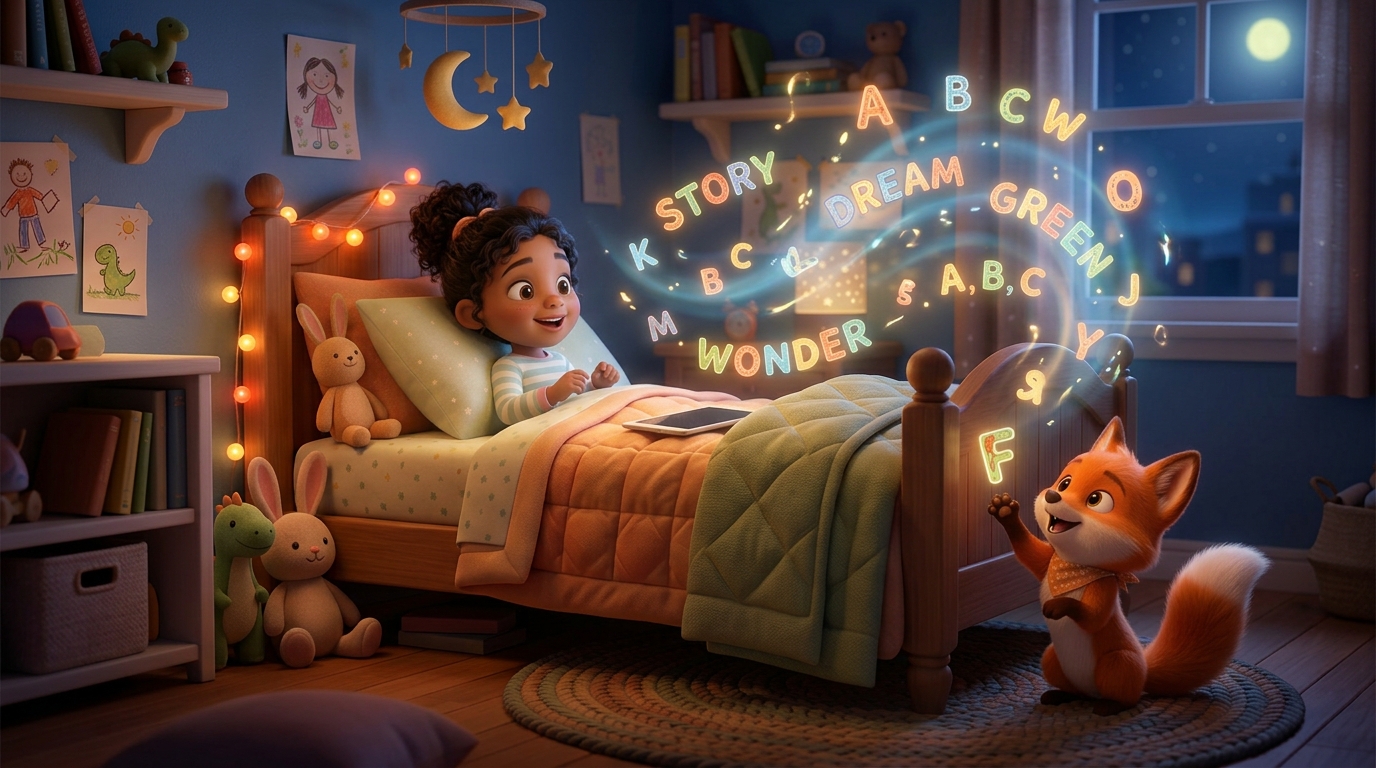
As parents, we know that a rich vocabulary is one of the most important building blocks for a child's success—both in school and in life in general. But how can we best stimulate this development in an era where screen time is often criticized? The answer lies in personalized stories that transform passive entertainment into active learning.
Personalized stories boost vocabulary by making the child the main character via the self-referencing effect. This increases engagement and makes new words easier to remember as they are linked to the child's own world. By using apps like Flipr, screen time is transformed into active learning that strengthens both language comprehension and the ability to express oneself.
Why is a good vocabulary important for my child's development?
A strong vocabulary is the foundation for good reading comprehension, the ability to express oneself clearly, and general cognitive development. Children with a broad vocabulary find it easier to:
- Understand what they read: They can decode new words faster and understand nuances in the text.
- Express themselves precisely: They can formulate their thoughts, feelings, and ideas more effectively.
- Keep up in school: They find it easier to acquire new knowledge across subjects.
- Participate in social interactions: They can engage in deeper conversations and understand social cues.
Traditionally, reading aloud has been the primary method for expanding children's vocabulary, and it remains invaluable. However, with the emergence of personalized digital stories, new and effective paths are opening up. Research shows that daily bedtime stories have a particularly strong effect on language development—even 15 minutes in the evening makes a significant difference over time.
How do personalized stories affect children's learning?
Imagine a story where the main character has the same name as your child, lives in a house that looks like yours, and has a best friend who reminds them of their own. This form of personalization isn't just fun; it is deeply effective for language learning.
Research in psychology and pedagogy points to the so-called "self-referencing effect". This phenomenon describes how information related to one's own person is remembered better and processed more deeply. When a child is the protagonist in a story—or hears their own name—something special happens. Read our in-depth article on why children love reading about themselves to understand the full science behind the effect:
- Increased engagement: The child is more motivated and engaged because the story is about them. This leads to a more active listening and reading experience.
- Reinforced understanding: New words and concepts become more concrete and meaningful when they are directly linked to the child's own context and world of experience.
- Deeper learning: The increased emotional connection and relevance ensure that new words and sentence structures are not just heard, but internalized and remembered better.
How does Flipr help my child learn new words?
Flipr is designed to utilize exactly this personalization effect to boost your child's vocabulary. With Flipr, your child can:
- Create their own 3D avatar: The child sees themselves as the hero, which increases identification and engagement.
- Include friends, family, and pets: The stories become even more relevant and recognizable when familiar faces appear.
- Experience stories adapted to age and interests: The app adjusts language and difficulty level so that new words are introduced at an appropriate level.
- Choose "Read to me" mode: Here, the child is introduced to a richer vocabulary and more complex narratives that they might not be able to decode themselves yet, but which they can understand in the context of the personalized story.
By making reading a personal and interactive experience, Flipr transforms screen time into a powerful engine for language development.
What is the next step toward a richer vocabulary?
A rich vocabulary is a gift that lasts a lifetime. By combining the well-known benefits of reading aloud with the innovative power of personalized stories, you can give your child an invaluable head start. Flipr makes it easy and fun to expand vocabulary, stimulate imagination, and create a deep love for reading, where the child is always at the center of their own linguistic adventure.
Why is a large vocabulary so important for my child?
A large vocabulary is crucial for reading comprehension, the ability to express oneself clearly, success in school, and general cognitive development. It provides your child with better prerequisites for understanding the world around them and communicating effectively.
How can personalized stories help expand vocabulary?
When your child is the main character in a story, engagement and identification increase significantly. New words and concepts become more relevant and meaningful, leading to deeper learning and better memory of the new words (known as the "self-referencing effect").
Is Flipr only for children who can already read?
Absolutely not! Flipr is designed for children aged 3-13. For the youngest and beginning readers, we offer a "Read to me" function with a richer vocabulary that stimulates listening comprehension. For those who read themselves, the difficulty level is adapted.
How often should my child use Flipr to see an effect on their vocabulary?
Consistency is key. Even short, daily sessions with personalized stories can have a big impact. Flipr's "Story of the Day" feature is designed to provide a daily, age- and interest-based story that supports continuous language development.
Can personalized stories replace traditional reading aloud?
Personalized stories are a fantastic supplement to reading aloud, not a replacement. Reading aloud creates unique moments of closeness and interaction. Flipr enriches the reading experience by making it more engaging and relevant for the child.
Give your child a world of new words
Reference: Hart, B., & Risley, T. R. (1995). Meaningful differences in the everyday experience of young American children. | Cunningham, A. E., & Stanovich, K. E. (1997). Early reading acquisition and its relation to reading experience and ability 10 years later. | Rogers, T. B., Kuiper, N. A., & Kirker, W. S. (1977). Self-reference and the encoding of personal information.
Read also
- Learn a new language with Flipr: 10 minutes a day can make a world of difference
- Do Bedtime Stories Boost Children's Language Development?
- Why children love hearing their own name in a story
- My child won't read: 7 things that actually work
- Pleasure Reading: The Complete Guide to Turning Your Child into a Reader
- Easy Reader Books vs. Personalized Stories: What Works Best for Beginning Readers?