Bookworms: How to raise a child who loves to read
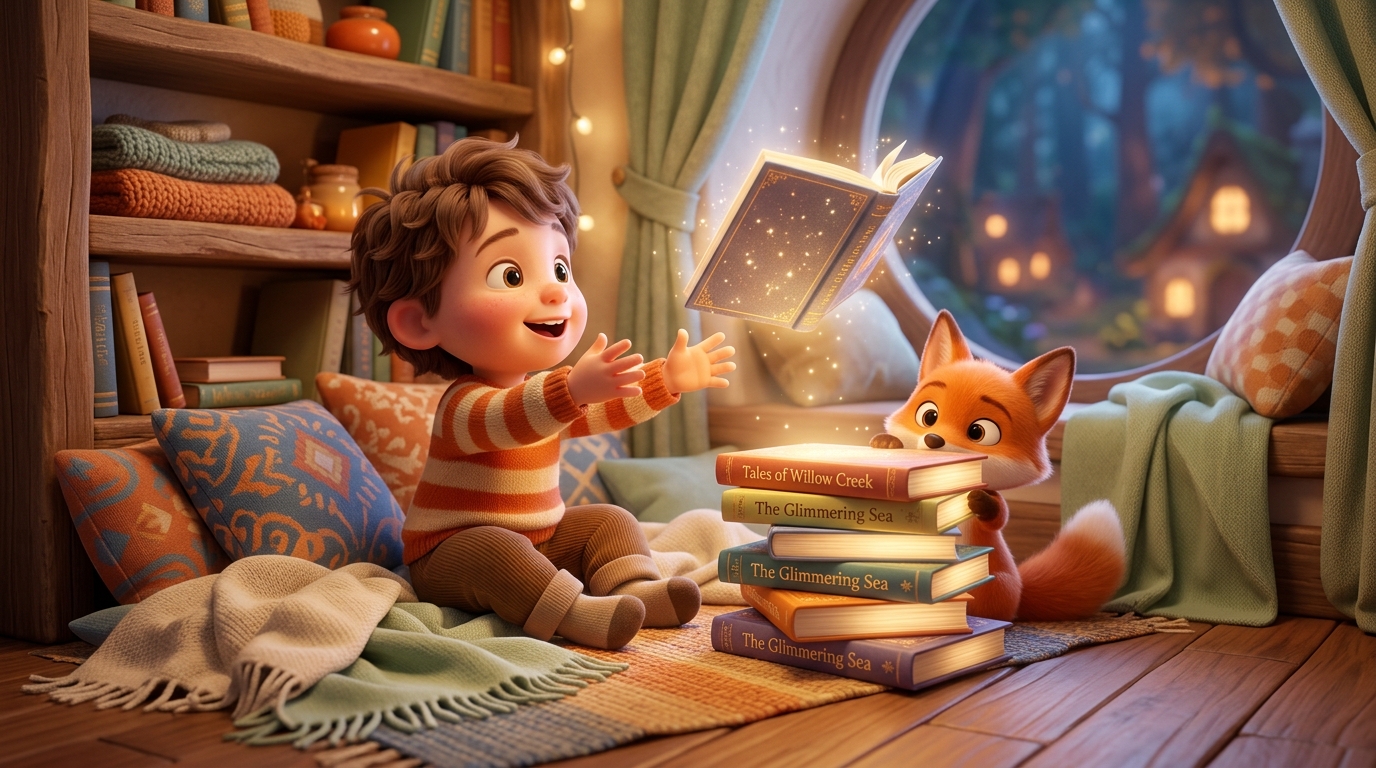
Some children voluntarily read for hours on end. Others close a book after 5 minutes. The difference is rarely about intelligence – it's about the habits, environments, and experiences the child has encountered. Here is how you build a bookworm from scratch.
You create a child who loves to read by making books visible in the home, reading aloud for a long time, and giving the child complete free choice over their reading material. By removing pressure and instead focusing on reading as a pleasure-filled experience where the child might even be the hero, you build natural and lasting reading habits.
What characteristics define a child who is a true bookworm?
A bookworm isn't just a child who reads a lot – it's a child who chooses to read when they have time. A child for whom books are a source of experiences, not a duty.
Research from Pew Research and PIRLS points to 5 common traits in bookworms:
- They grew up in a home with visible books.
- They were read aloud to daily until at least age 8.
- They had free choice in what they read.
- They saw their parents reading themselves.
- They were never forced to read 'real' books.
The last point is the most overlooked. Many parents dismiss comics, magazines, and easy-readers – and thereby extinguish the flame.
How do I get my child to love reading with 8 great tips?
1. Make books visible everywhere
Not just on the shelf. Place them on the coffee table, in the car, at the dining table, in the bathroom. Books that are left out get read. Books on the shelf get forgotten.
2. Read aloud for much longer than you think
Many parents stop reading aloud around age 7-8 because the child 'can do it themselves.' This is a mistake. Reading aloud to 10-12-year-olds gives them access to much more complex stories than they can read on their own – and continues to strengthen vocabulary and language comprehension. Read our guide to reading aloud. Research shows that daily bedtime stories are one of the most effective ways to support language development.
3. Let the child choose everything
Comics, fact-books about sharks, cookbooks, Pokémon manuals, joke books. Everything counts. Researchers agree: children who choose for themselves read 3-5x more than children whose books are chosen by parents.
4. Create a 'reading nook'
A place in the home with good lighting, a soft pillow or chair, and books within reach. It signals that reading is an activity that has its own place – just like eating and playing.
5. Show that you read yourself
This is the strongest modeling effect there is. A child who sees parents reading on the sofa in the evening – without a phone – is programmed to see reading as an attractive adult activity.
6. Talk about books as experiences
Not 'what did you learn?' but 'was it exciting?' 'what would you have done?' 'which character did you like best?'. Reading should be associated with emotions and imagination – not with performance.
7. Go to the library once a month
Free, infinite selection, and a social setting for reading. Many children love choosing 10 new books themselves. Half of them might never be read – and that's okay.
8. Use personalized stories as a restart
For a child who has stalled – or never got started – personalized stories can be the turning point. When your child is the hero in their own book, reading changes from 'something I have to do' to 'something about me.' Flipr is built for exactly this: an endless stream of personalized stories adapted to age and reading level from 4 to 10 years. Read also our article on the science behind why children love to read about themselves.
How do I support my school-aged child's reading between ages 6 and 10?
- 6-7 years: Take turns reading 1 page each. Keep sessions short (10-15 min). Victories are more important than quantity.
- 8-9 years: Introduce 'reading time' after dinner. Let the child choose a series to follow.
- 10 years+: Give space for longer books. Talk about them as equals – without asking for details as if it were a test.
Which mistakes should I avoid if my child is to enjoy books?
- Rewarding reading with money or screen time – it signals that reading is something unpleasant that needs to be compensated for.
- Forcing reading as a punishment – ('you must read for an hour before you can play') – guaranteed dislike.
- Correcting pronunciation of every word during reading – it stops the flow and kills the desire.
- Comparing with siblings or classmates – reading development is individual.
What do I do if my child is a late reader or I am worried?
Some children read late. That doesn't mean they will never become bookworms. Many children 'click' only at age 9-10, often when they find the right series or genre. Have patience – and keep the offer open.
If you are worried about dyslexia or other reading challenges, talk to the school about an assessment. It's not a failure – it's an opportunity to give the child the right tools.
What is the most important recipe for creating a bookworm?
A bookworm is not created by the right book choice or the right method. It is created by a home where books are visible, where reading is social and joyful, and where the child always has free choice. Start where you are – it's never too late.
When is it too late to turn my child into a bookworm?
It is never too late. Many children 'click' with reading at age 9-10 when they find the right genre or series. The most important thing is to keep the offer open, read yourself as a parent, and let the child choose for themselves.
Should I stop reading aloud when my child can read on their own?
No – continue as long as the child wants, preferably until age 10-12. Reading aloud provides access to much more complex stories than the child can read themselves and continues to strengthen vocabulary and language comprehension.
Do comics and Pokémon books count as real reading?
Yes – and that is often exactly the kind of reading that builds bookworms. Children who choose for themselves read significantly more than children whose books are chosen by parents. Comics, magazines, and fact-books count just the same.
How do I start if my child already rejects reading?
Start by removing the pressure, listen to why the child doesn't want to, and find the right level and theme. Personalized stories where the child is the hero can often reignite the desire in a few weeks because reading feels relevant again.
Create a bookworm with personalized stories
Reference: Mullis, I.V.S., Martin, M.O., Foy, P., Kennedy, A.M., Fishbein, B. (2023). PIRLS 2021 International Results in Reading.
Read also
- Pleasure Reading: The Complete Guide to Turning Your Child into a Reader
- My child won't read: 7 things that actually work
- Easy Reader Books vs. Personalized Stories: What Works Best for Beginning Readers?
- Why children love reading about themselves — the science behind it
- Can AI Stories Replace Real Books?
- Do Bedtime Stories Boost Children's Language Development?