Getting Your Child to Sleep: 9 Strategies That Work
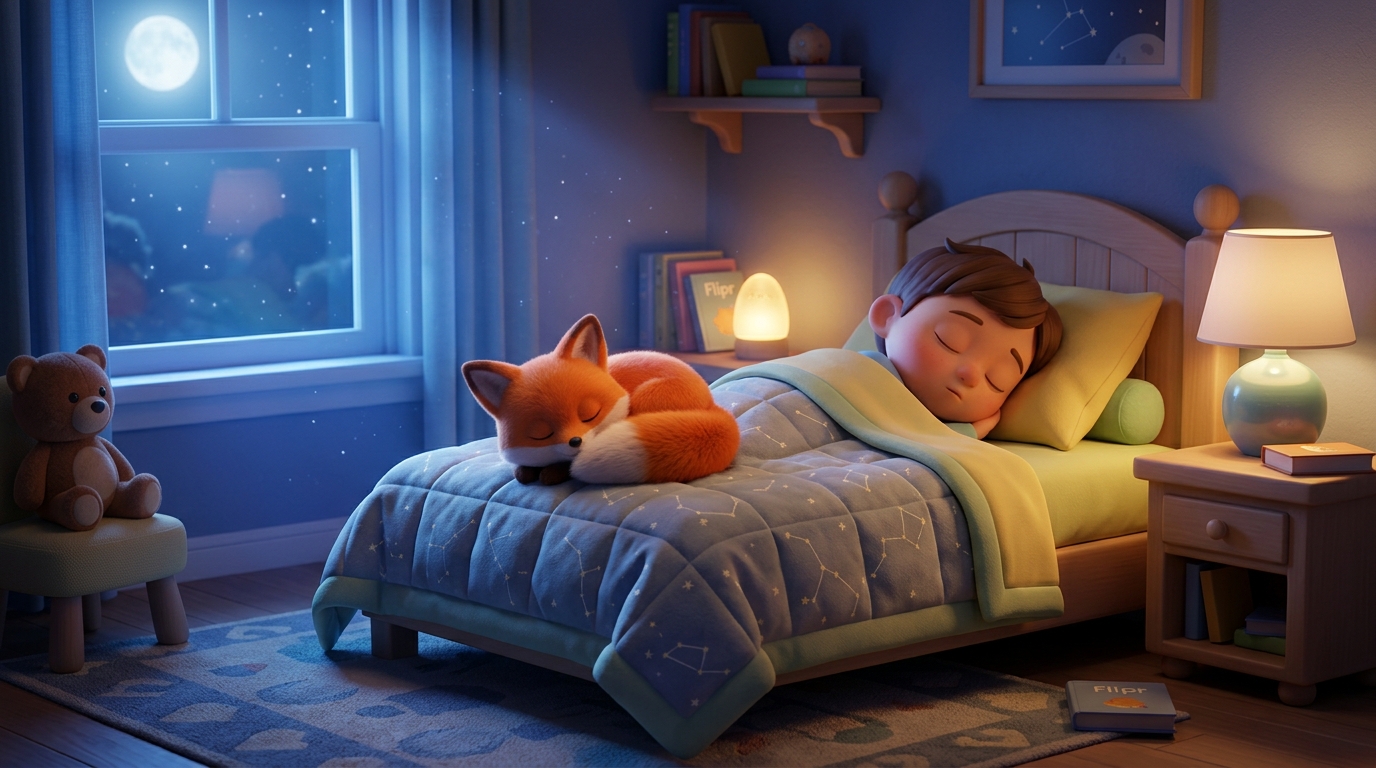
When bedtime becomes a daily struggle, there are fortunately concrete things you can change – without complicated methods or expensive courses. Here are 9 strategies you can start tonight.
You get your child to sleep by hitting the right sleep window before overtiredness sets in, maintaining a consistent routine, and creating a calm transition with a screen-free period. A personalized bedtime story where the child is the hero helps the brain shift from the day's stimuli to deep calm and rapid sleep onset.
How do you hit the child's correct sleep window?
Children have a 'sleep window' – a 20-30 minute period where they are tired enough to sleep, but not overtired. If you miss it, the 'second wind' arrives – energy caused by stress hormones.
Signs the window is open: rubbing eyes, yawning, becoming quiet, losing interest in play.
Signs of overtiredness: hyperactivity, irritability, hysterical laughing or crying. If you see this, you are too late – move bedtime 15-30 minutes earlier tomorrow.
Why are consistent bedtimes on weekends important?
Allow a maximum of 30-45 minutes variation on days off. Larger fluctuations shift the internal rhythm and make Monday morning a nightmare.
How do you build a good bedtime routine without the struggle?
The same 3-4 steps in the same order every night. Bath → pajamas → teeth → story. Predictability > discussion.
Read our complete guide to a calm bedtime routine →
When should you turn off the screen before bedtime?
Blue light delays melatonin. Fast-paced content keeps the brain in an alert state. Replace it with drawing, puzzles, gentle play, or a story. If you use a screen anyway, read our guide on when an iPad for bedtime stories is a good idea.
How do you set up a sleep-friendly children's room?
- Blackout curtains – especially in the summer.
- 18-20°C – no warmer.
- Quiet – potentially white noise if the environment is noisy.
- Nightlight with warm reddish light if the child is afraid of the dark.
How much physical activity does the child need to sleep better?
Minimum 30-60 minutes of outdoor play, preferably before 5 PM. A body that has moved falls asleep much more easily than one that has been sitting still.
What should the child avoid eating and drinking before bedtime?
Dinner at least 2 hours before bedtime. Sugar close to bedtime provides an energy boost just when the body needs to relax.
What is the significance of a transitional object for the child's sleep?
A special teddy bear, a soft cloth, or a pajama blanket can become a secure anchor. Let it always be there at bedtime – it signals 'now we sleep'.
Why does a personalized Flipr story have a calming effect?
This is often the missing piece. When a child hears their own name in a calm story and is the hero, the brain shifts from the day's stimuli to a calm internal visualization. It is this shift that makes falling asleep fast.
No time or energy to invent stories every night? Flipr creates them in 30 seconds, reads them aloud with a gentle voice, and adjusts the difficulty level to the child's age.
What are the typical signs of overtiredness in children?
Overtiredness is, ironically, the most frequent reason why children cannot sleep. Stress hormones spike, the brain enters an alert state, and the child runs on adrenaline instead of relaxing.
Signs of an overtired baby/toddler:
- Hysterical crying that cannot be comforted.
- Hyperactivity in the evening, not calm.
- Tense body, clenched fists.
- Won't lie still in bed.
What do you do then?
Calm sensory input: dimmed lights, a gentle story, physical affection, white noise. Avoid more stimuli – no TV, no tickling, no negotiations. The brain needs to be braked, not activated.
Which mistakes should be avoided when putting children to bed?
- Waiting until the child is 'really tired' – this causes overtiredness, not better sleep.
- Car rides to get the child to sleep – a short-term fix that sabotages the routine.
- Long negotiations at bedtime – signals that bedtime is optional.
- Tablet in bed – the worst for sleep quality.
- Changing the routine often – stick with it for at least 2 weeks before evaluating.
What to do if the child still cannot sleep?
If you have tried the above consistently for 2-3 weeks and the child is still struggling, it could be a sign of:
- Sleep apnea (snoring, breathing pauses).
- ADHD or sensory challenges.
- Iron deficiency.
- Anxiety or other worries.
Contact a health visitor or doctor for an assessment.
How to get started with better sleep habits today?
Most children fall asleep more easily with better timing, a fixed routine, and a calm transition from day to night. No miracle methods – just small adjustments that build up to big changes.
What is the most important step if I want my child to sleep better?
Hit the right sleep window. If your child is overtired, stress hormones spike and make falling asleep impossible. Signs of the right window are yawning, eye rubbing, and losing interest in play.
My baby is overtired – what do I do?
Create calm sensory inputs: dim the lights, use a gentle voice/story, physical affection, and potentially white noise. Avoid more stimuli like TV or tickling. The brain needs to be braked, not activated. Move bedtime 15-30 minutes earlier tomorrow.
Can I let my child use a tablet in bed to fall asleep?
No – it is one of the worst habits for sleep quality. Blue light delays melatonin, and fast-paced content keeps the brain awake. Use a read-aloud bedtime story instead.
How long should I try a new routine before evaluating it?
At least 2 weeks. Children need consistent repetition before a new routine takes hold. If you change too quickly, the child won't know what to expect.
The easy way to a calm bedtime
Reference: Mindell, J. A., & Williamson, A. A. (2018). Benefits of a bedtime routine in young children. Sleep Medicine Reviews, 40, 93-108.
Read also
- Ferber Method Explained: How It Works – and What You Need to Know First
- The ultimate guide to a calm bedtime routine: Why personalized stories are the shortcut to dreamland
- When your child can't fall asleep: A practical guide for 2-7-year-olds
- How many hours should a child sleep? Sleep needs from 1 to 14 years
- Stories as a Shield Against Fear of the Dark and Nightmares: Creating Security with Flipr
- 3-year-old hard to put to bed? 7 reasons – and what you can do tonight