3-year-old hard to put to bed? 7 reasons – and what you can do tonight
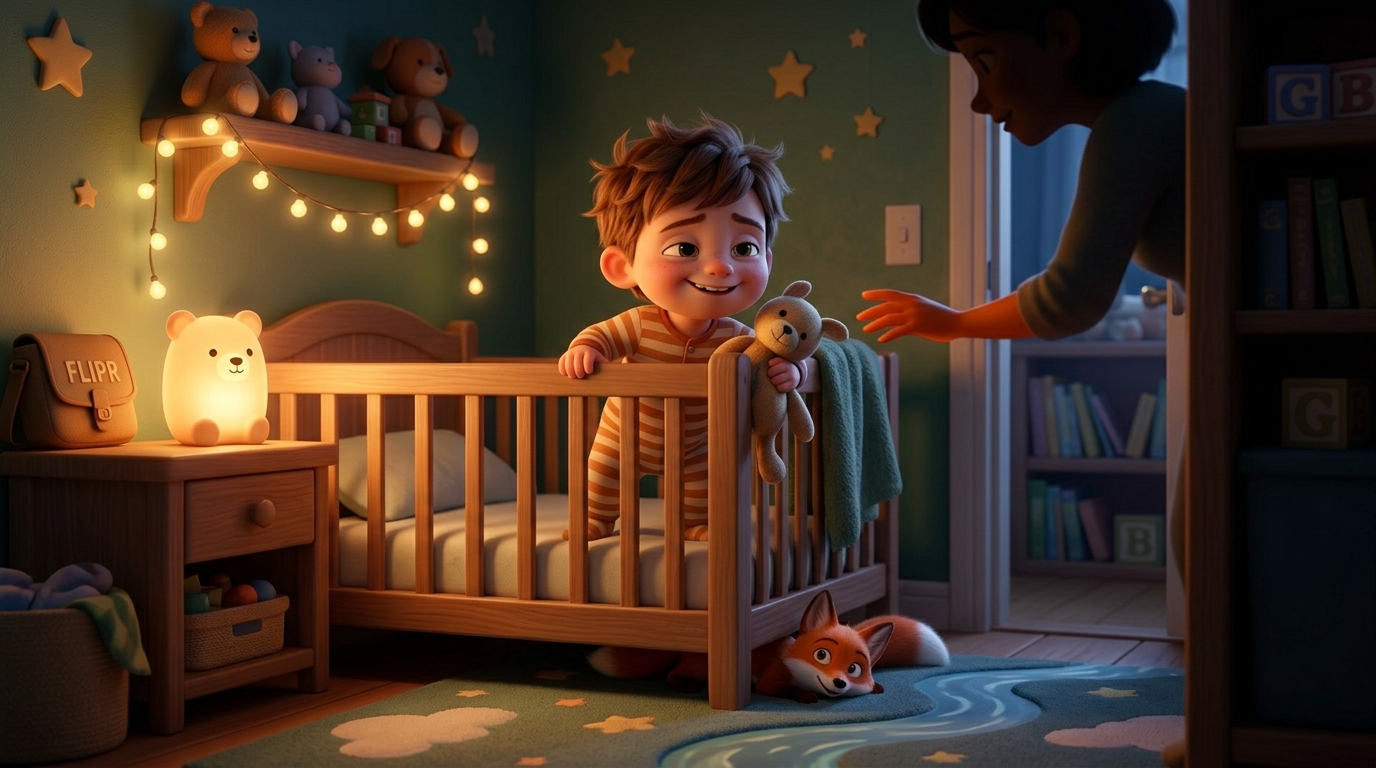
Many parents recognize it at the age of 3: The child who used to fall asleep in 5 minutes suddenly wants to get back up, asks for water, cries, or insists that Dad must do the bedtime routine instead of Mom. Here are the 7 most common reasons – and what you can do about each one.
A 3-year-old can be hard to put to bed due to exploding independence, routines that are too short, or too much screen time before bed. You can make bedtime easier tonight by giving the child small choices, extending the routine to 30-45 minutes without screens, and finishing with a calm bedtime story in bed.
Why is my 3-year-old fighting bedtime?
At age 3, children are testing their own will. 'No' becomes the favorite word, and bedtime suddenly becomes a battle for control. This is development, not defiance – but it doesn't feel that way at 9:30 PM.
What you can do: Give the child small choices within the routine. 'Do you want the blue or red pajamas?' 'Should we read about a rabbit or a dragon?' The feeling of control often removes the resistance.
How long should a good bedtime routine be for a 3-year-old?
Many families squeeze bedtime into 10 minutes after an active evening. A 3-year-old needs 30-45 minutes of decreasing energy to wind down.
What you can do: Introduce 3 fixed steps that always happen in the same order: bath/wash → teeth → a story in bed. Predictability is calming.
What to do when the child only wants to be put to bed by one parent?
Many 3-year-olds go through a phase where only one parent is allowed to handle bedtime. It feels like a rejection to the other parent, but it is a completely normal attachment phase.
What you can do: Switch gradually. The 'preferred' parent starts the routine, while the other reads the story. Over weeks, the child will ease into the idea that both are great to snuggle with.
How much should a 3-year-old nap during the day?
A 3-year-old typically sleeps 11-13 hours a day. If they are still sleeping 2 hours in the middle of the day, the night can become squeezed.
What you can do: Shorten the nap to 60-90 min, and ensure it ends no later than 2:00 PM. Also, read our guide on søvnbehov pr. alder.
When should you turn off the iPad before bedtime?
Blue light and fast visual stimuli delay melatonin production and make falling asleep harder. An iPad right before brushing teeth is often the culprit.
What you can do: Screen stop at least 60 minutes before bedtime. Replace it with calm activities – drawing, puzzles, or a gentle story. Read also Skærmtid med god samvittighed.
How to help a child who is afraid of the dark?
At age 3, the imagination starts to take flight. This is wonderful during the day – but at night, shadows can turn into monsters, and the child finds it hard to relax.
What you can do: Use a nightlight with a warm glow. Talk briefly during the day about what awaits tomorrow, so the brain gets to 'close down the day'. Read also Historier som skjold mod mørkerædsel.
How much exercise does a 3-year-old need before the night?
A 3-year-old who has sat very still or been in a car/passive activity simply hasn't used enough energy.
What you can do: 30-60 min of active play outdoors every day. It doesn't have to be structured – it just needs to be movement.
How to build the best bedtime routine?
- 45 min before: End screen time. Calm play or puzzles.
- 30 min before: Bath or wash. Pajamas on.
- 15 min before: Teeth. Toilet.
- In bed: One bedtime story – ideally one where the child is the hero themselves.
- Lights out: Short cuddles, say goodnight, leave the room.
Why a personalized story helps
When a child hears their own name in a story and is the hero of a calm adventure, something important happens: They feel seen and significant – and that is exactly the feeling that allows the brain to release the day's tensions. Flipr creates exactly these personalized bedtime stories, so you don't have to improvise after a long day.
Summary: How do I get my 3-year-old to sleep?
A 3-year-old who is hard to put to bed is rarely 'difficult'. It is often a developmental leap, a routine that needs adjustment, or a need for more control and predictability. Try one adjustment at a time, give it 5-7 nights, and see what changes.
Why is my 3-year-old suddenly hard to put to bed?
The age of 3 is characterized by significant independence development, exploding imagination, and testing boundaries. Bedtime often becomes a battle for control, not because the child doesn't want to sleep, but because they want to choose for themselves. Fixed frameworks combined with small choices solve most issues.
How long should a good bedtime routine last?
For a 3-year-old, 30-45 minutes of decreasing energy is recommended: calm play → bath/wash → teeth → a story in bed. Predictability and the same order every night are more important than the specific content.
Should a 3-year-old still nap during the day?
Many 3-year-olds still sleep for 60-90 minutes mid-day, but the nap should end by 2:00 PM at the latest, otherwise it affects nighttime sleep. If the child sleeps 2+ hours and is hard to put to bed in the evening, shorten the nap.
Can a personalized bedtime story really make a difference?
Yes. When the child is the hero of the story, they feel seen and calm down. It shifts focus from the day's stimuli to a calm internal visualization – and that is exactly what helps the brain drift off to sleep.
Make your bedtime routine easier with a personalized bedtime story
Reference: Sundhedsstyrelsen, 'Søvn hos børn 0-6 år' (2023).
Read also
- When your child can't fall asleep: A practical guide for 2-7-year-olds
- Ferber Method Explained: How It Works – and What You Need to Know First
- The ultimate guide to a calm bedtime routine: Why personalized stories are the shortcut to dreamland
- Getting Your Child to Sleep: 9 Strategies That Work
- How many hours should a child sleep? Sleep needs from 1 to 14 years
- Stories as a Shield Against Fear of the Dark and Nightmares: Creating Security with Flipr