How many hours should a child sleep? Sleep needs from 1 to 14 years
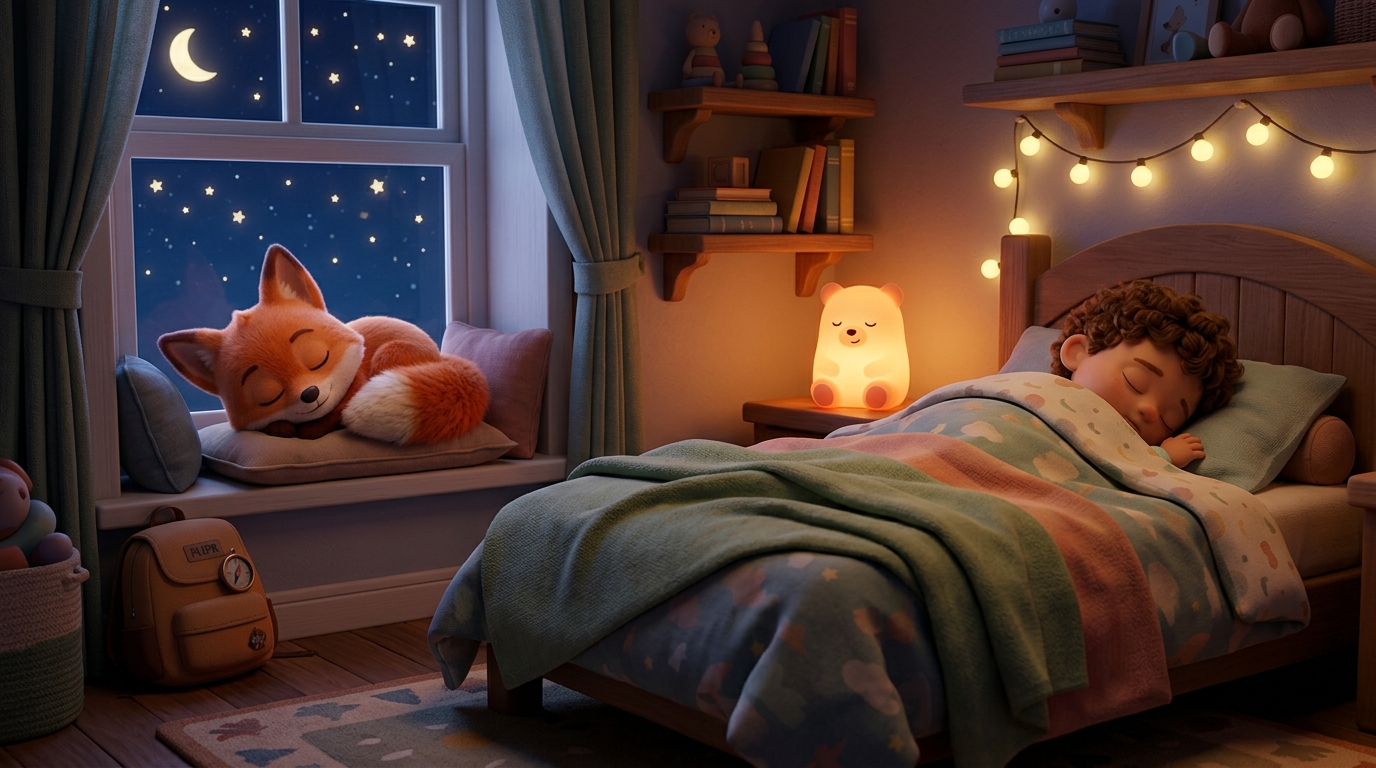
Sleep needs change significantly throughout childhood – and it is one of the most frequently asked questions among parents. Here is a clear overview based on recommendations from the American Academy of Sleep Medicine (AASM), plus the signs you should look out for.
A child aged 1-2 needs 11-14 hours of sleep per day, a child aged 3-5 needs 10-13 hours, a child aged 6-12 needs 9-12 hours, and a teenager aged 13-18 needs 8-10 hours. These figures represent the total time per 24 hours including naps and come from the American Academy of Sleep Medicine.
| Age | Daily sleep | Daytime nap |
|---|---|---|
| 1-2 years | 11-14 hours | 1-2 naps |
| 3-5 years | 10-13 hours | 0-1 nap |
| 6-12 years | 9-12 hours | No nap |
| 13-18 years | 8-10 hours | No nap |
Source: American Academy of Sleep Medicine (Paruthi et al., 2016), consensus recommendation for children 4 months – 18 years.
How much should children sleep by age?
AASM's recommendations are divided into age brackets – not single years – because the variation between two children of the same age can be large. The table above shows the official brackets. Below, we translate them into everyday life.
Note that these are total hours per 24-hour period – including any naps. A 3-year-old who naps for 1 hour at midday needs 9-12 hours of nighttime sleep.
How many hours should a 1-2-year-old sleep?
11-14 hours per day. Most 1-year-olds sleep 10-12 hours at night and still take 1-2 naps; many transition from two naps to one around 15-18 months. For 2-year-olds, one midday nap is typically enough. Maintain consistent times – the body and brain learn the rhythm.
How much should a 3-5-year-old sleep?
10-13 hours per day. Some 3-year-olds drop the nap entirely, while others keep it for 60-90 minutes. The most important thing is that the nap isn't too late – preferably finished by around 2 PM. Also read 3-year-old hard to put to bed if bedtime is a struggle.
How much sleep should a 10-year-old get?
A 10-year-old falls under the 6-12 years bracket and should sleep 9-12 hours per day. If the child needs to be up at 7 AM, this means a bedtime between approx. 7 PM and 10 PM – and for most 10-year-olds, 8-9 PM is the realistic range if the morning is to function without an alarm clock battle.
When should a 10-year-old go to bed?
Work backwards from the time the child needs to get up. If the child gets up at 6:30 AM and you are aiming for 10 hours of sleep, the lights should be out at 8:30 PM – and the routine should begin approx. 30 minutes before. It is the end time for screens, not the start of the tuck-in, that determines if the math adds up.
How many hours of sleep should a 12, 13, and 14-year-old get?
A 12-year-old is still in the 6-12 years bracket: 9-12 hours. From age 13, the teenage bracket of 8-10 hours applies, so both a 13-year-old and a 14-year-old need at least 8 hours – and typically more. During puberty, the internal circadian rhythm shifts, so the child naturally becomes tired later; therefore, consistent wake-up times and a screen-free final hour become more important than ever.
What are the signs of too little sleep?
- Difficulty waking up in the morning (needs to be woken every day).
- Mood swings and a short fuse in the afternoon.
- Difficulty concentrating at school.
- Falling asleep during car rides or on the sofa.
- Hyperactivity in the evening (paradoxical – but fatigue can manifest as energy).
If you recognize several of these, it may be worth moving bedtime 30 minutes earlier for 2 weeks to see the difference.
How do I get my child to sleep the hours they need?
It's not just about bedtime – it's about how bedtime proceeds. A stressed, hurried 10-minute tuck-in without calm often leads to a long time falling asleep. A calm routine of approx. 30 minutes with a good bedtime story makes falling asleep significantly shorter for most children.
Read our guide to a calm bedtime routine →
Personalized stories and falling asleep
When the child is the hero of their own story, the brain shifts to a calm internal state. This is exactly the shift that makes falling asleep easier and sleep deeper. Flipr creates personalized bedtime stories of 5-15 minutes – enough to drift off, not enough to stay awake.
Conclusion
Sleep needs decrease gradually throughout childhood, but even a 12-year-old needs 9-12 hours, and a 14-year-old needs 8-10. If your child hits the recommended number and wakes up rested, you are on the right track. If not, start by moving bedtime 30 minutes earlier and introducing a consistent routine.
How many hours should a 3-year-old sleep in total?
10-13 hours per day incl. naps according to AASM. Most 3-year-olds sleep 10-12 hours at night and potentially take a short nap that ends well before evening.
How much sleep should a 10-year-old get?
9-12 hours per day. If the child needs to be up at 7 AM, this typically corresponds to a bedtime between 8 PM and 9 PM to allow for 10-11 hours of sleep.
How many hours of sleep should a 14-year-old get?
8-10 hours per day according to AASM's recommendation for 13-18-year-olds. Many teenagers get less because the circadian rhythm shifts during puberty – consistent wake-up times help.
Is my child getting too little sleep?
Signs include difficulty waking up, mood swings, poor concentration, and hyperactivity in the evening. Try moving bedtime forward by 30 minutes for two weeks to see if it helps.
When do children stop napping during the day?
Most children drop their midday nap between ages 3 and 4. Some maintain a short quiet period without sleep up until age 5, which is also fine.
Help your child get better sleep with a personalized bedtime story
Reference: Paruthi, S. et al. (2016). Recommended Amount of Sleep for Pediatric Populations: A Consensus Statement of the American Academy of Sleep Medicine. Journal of Clinical Sleep Medicine, 12(6), 785-786.
Read also
- Ferber Method Explained: How It Works – and What You Need to Know First
- Getting Your Child to Sleep: 9 Strategies That Work
- What is the Best Age for Bedtime Stories?
- The ultimate guide to a calm bedtime routine: Why personalized stories are the shortcut to dreamland
- When your child can't fall asleep: A practical guide for 2-7-year-olds
- 3-year-old hard to put to bed? 7 reasons – and what you can do tonight