When your child can't fall asleep: A practical guide for 2-7-year-olds
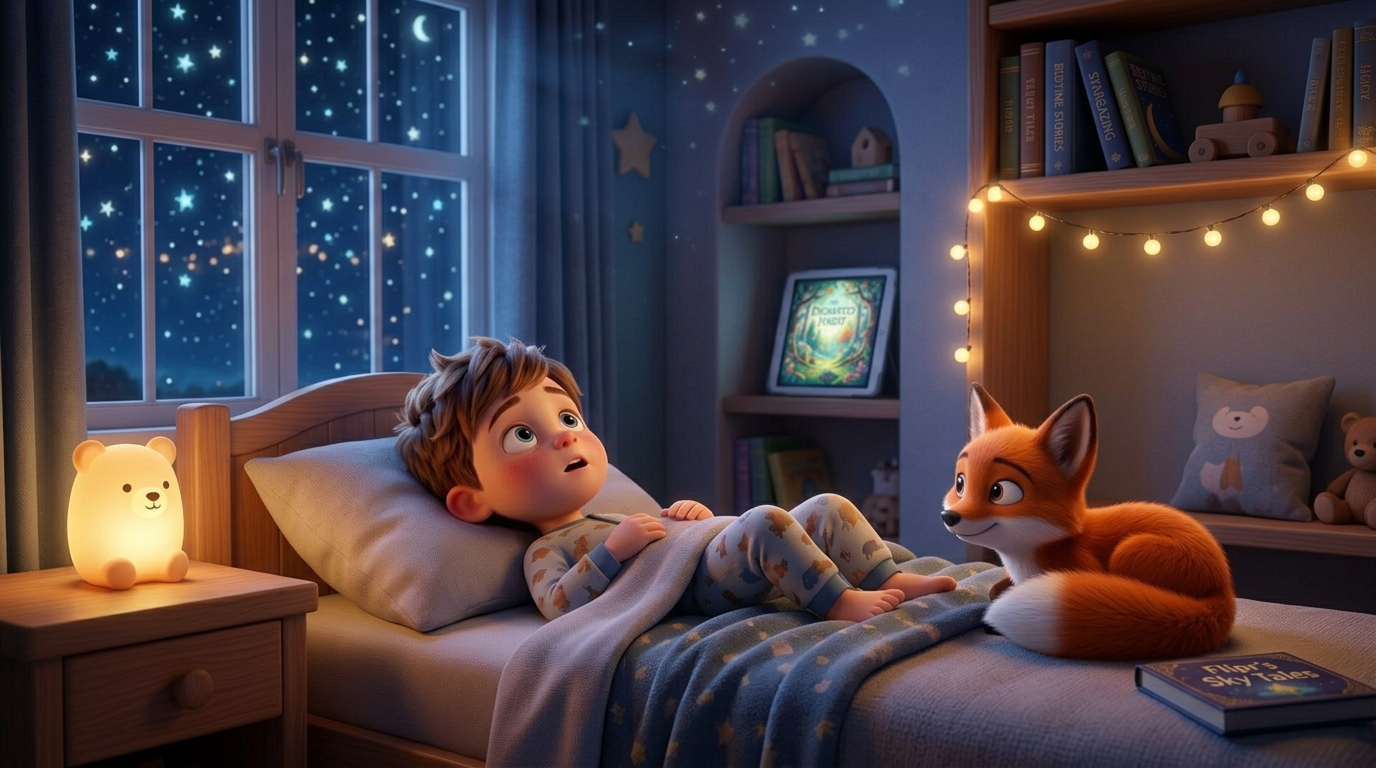
The child is tired. You are tired. The lights are out. But after 45 minutes, a wide-awake child is still lying there in the dark. If you recognize this scene, you are far from alone. Here are the most common causes – and what actually helps.
A child is having difficulty falling asleep if it takes more than 30 minutes. The most common causes are incorrect bedtime timing, too much screen time before sleep, or a lack of consistent routines. You can help your child by ensuring physical activity during the day, stopping screen use 60 minutes before bed, and establishing a predictable bedtime routine with calm stories.
How long should it take for a child to fall asleep?
Most children fall asleep within 15-20 minutes when they are tired. If it consistently takes more than 30 minutes, there is something in the routine or environment that can be adjusted.
Why can't my child fall asleep?
1. Bedtime timing is off
Too late → the child becomes over-tired and hyper. Too early → the child is not physiologically ready. Hitting the mark → falling asleep in 5-15 minutes.
Test: Shift bedtime 15 minutes earlier for a week. No effect? Shift 15 minutes later. Find the window.
2. Too little physical activity during the day
A long day in the car, daycare with quiet play, or too much screen time → the body hasn't used up its energy.
Solution: Minimum 30-60 minutes of active outdoor play every day. Preferably before 5:00 PM (late intense play can wake them up instead of tiring them out).
3. Screen time too close to bedtime
Blue light delays melatonin by 30-90 minutes. Fast-paced videos and games keep the brain in 'alert mode'.
Solution: Screen stop at least 60 minutes before bedtime. Use calm alternatives: drawing, puzzles, a story. Read our guide on when an iPad for bedtime stories can actually be okay.
4. Lack of a predictable routine
When bedtime looks different every night, the brain doesn't know when to shut down.
Solution: The same 3-4 steps in the same order every night. Bath → pajamas → teeth → story. Period.
5. External environment
- Too bright (curtains without blackout lining in summer).
- Too warm (over 20°C leads to poor sleep onset).
- Too much noise (TV in the living room, siblings playing).
Solution: Blackout curtains, 18-20°C, and if noise is the problem, try a white noise machine.
6. Internal thoughts and worries
Fear of the dark, worry about tomorrow, or just a hyperactive imagination that won't turn off.
Solution: Briefly talk about the day and what awaits tomorrow so the brain can 'close down'. Use a calm bedtime story as a transition from thoughts to sleep. Read also Stories as a shield against fear of the dark.
How do I help children of different ages sleep?
2-3 years
Focus on fixed times and a short, predictable routine. Read also 3-year-old difficult to put to bed.
4-5 years
Imagination takes off – use stories to channel it. Short, calm adventures work better than long, exciting ones.
6-7 years
School + homework + activities can cause 'racing thoughts' in the evening. Set aside 10 minutes to talk about the day before turning off the light.
How do you build a good bedtime routine in 15-30 minutes?
- Screen stop and calm transition.
- Bath/wash and pajamas.
- Teeth and toilet.
- Into bed – one bedtime story.
- Light off – short affection, goodnight, leave the room.
Why a personalized story helps with falling asleep
When the child is the hero of their own calm story, three things happen simultaneously: attention shifts from external stimuli to internal imagery, the body relaxes, and the brain gets a calm anchor to drift off to sleep. Flipr creates exactly this type of personalized bedtime story – adapted to age and read with a gentle voice.
When should you seek medical advice for sleep problems?
Contact a health visitor or doctor if:
- The child consistently takes more than 60 minutes to fall asleep.
- There is heavy snoring or pauses in breathing.
- The child wakes up repeatedly without an obvious reason and is tired in the morning.
- Sleep onset problems have persisted for more than 4-6 weeks despite adjusting the routine.
How do we get started with better sleep habits?
Most sleep onset problems are solved by adjusting timing, daytime activity, and routine – not by forcing the child to sleep. Choose one initiative, give it a week, and adjust from there.
How long should it take for a child to fall asleep?
A well-rested, secure child usually falls asleep within 15-20 minutes. If it consistently takes more than 30 minutes, there is typically something in the routine or timing that can be adjusted.
My 2-year-old won't fall asleep – what do I do?
First, check the timing (perhaps bedtime is wrong), then the activity level during the day, then screen time in the last 60 minutes, and finally whether the routine is predictable enough. Choose one initiative and try it for a week.
Can a bedtime story really help with falling asleep?
Yes. A calm personalized story shifts the child's focus from external stimuli and worries to a calm internal visualization, lowers stress hormones, and acts as a secure anchor for sleep.
When should I see a doctor about sleep problems?
If problems have persisted for more than 4-6 weeks despite routine adjustments, or if there is heavy snoring, breathing pauses, or the child consistently takes over 60 minutes to fall asleep, contact a health visitor or doctor.
Easier sleep onset with a calm personalized bedtime story
Reference: American Academy of Pediatrics, 'Healthy Sleep Habits' (2024).
Read also
- 3-year-old hard to put to bed? 7 reasons – and what you can do tonight
- The ultimate guide to a calm bedtime routine: Why personalized stories are the shortcut to dreamland
- Getting Your Child to Sleep: 9 Strategies That Work
- Stories as a Shield Against Fear of the Dark and Nightmares: Creating Security with Flipr
- Ferber Method Explained: How It Works – and What You Need to Know First
- How many hours should a child sleep? Sleep needs from 1 to 14 years