Can AI Stories Replace Real Books?
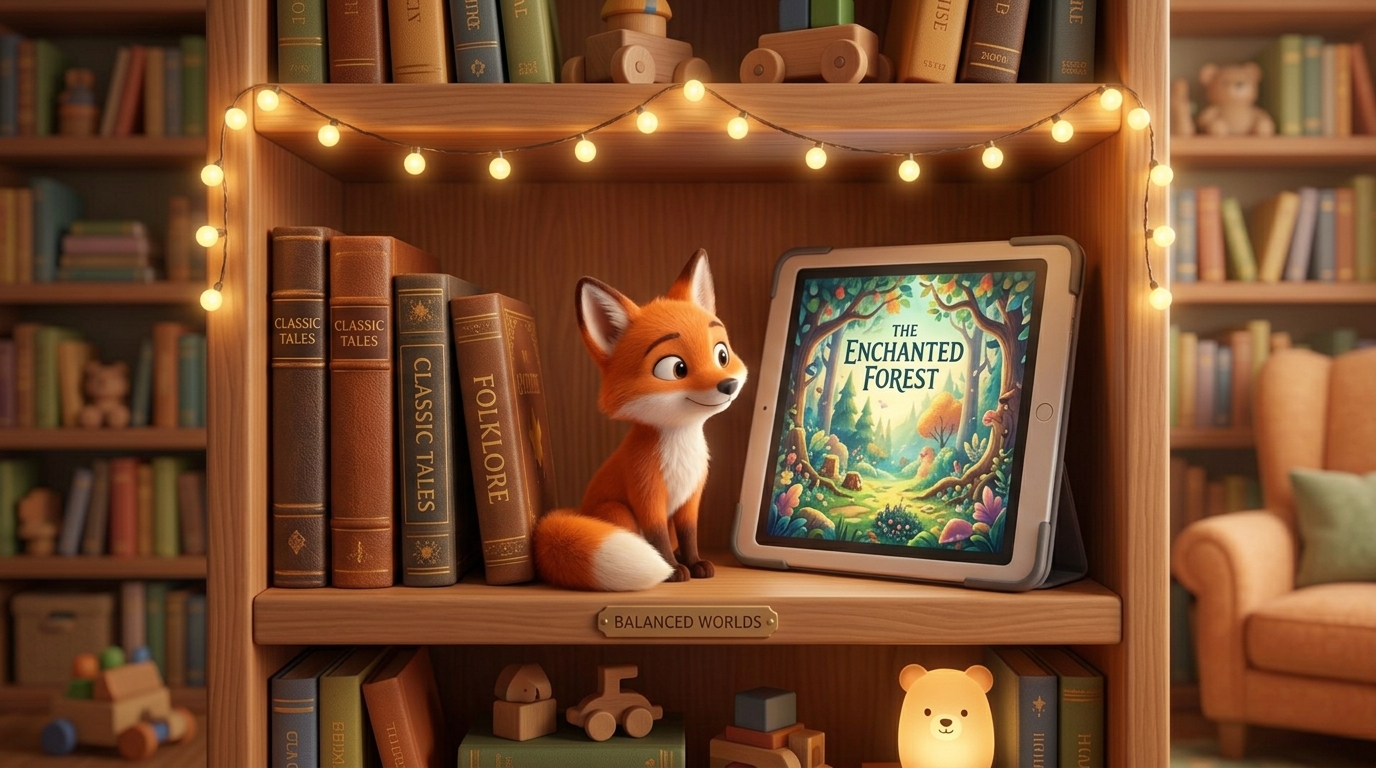
You're holding a worn-out picture book in your hand. Your child has heard it a hundred times. Yet, they want to hear it again — because it's the one they know. And you wonder: can an AI app really give them the same thing? It's a good question. And the answer is more nuanced than you might expect.
No, AI stories cannot replace real books, but they serve as a fantastic supplement. While physical books provide tactile comfort and classic language, AI apps like Flipr offer unique personalization where your child is the hero. The two formats solve different needs in the daily life of a modern family and should be used together.
What are the benefits of reading physical books for children?
Let’s start with the obvious: physical books are fantastic. There’s a reason they have existed for hundreds of years.
The tactile experience
Turning pages, feeling the paper, holding the book — it’s a sensory experience that cannot be digitized. For many children, the ritual of picking out the book is an important part of the bedtime routine.
Artistic quality
The best picture books are works of art. Illustrations by authors like Quentin Blake or Lisbeth Zwerger are created with a love and craftsmanship that is difficult to replicate.
Cultural and linguistic richness
Classic children's books are thoroughly edited and linguistically polished over many years. The language children encounter in good books helps shape their own.
The magic of repetition
Children love hearing the same book over and over again. It’s not boredom — it’s comfort. Repetition is part of the learning process.
What can AI stories do that regular children's books can't?
This is where AI really stands out:
Personalization
A physical book is about a girl named Sophie. A Flipr story is about your child’s Sophie — with her dog Carlo, her best friend Emma, and her little brother Oscar. It is created for exactly your child and no one else.
Infinity
A book is the same every time. An AI app can generate a new, unique story every single night — from the time of the dinosaurs to outer space to the magical forest.
Interactivity
With Flipr, the child can choose what happens, who is involved, and which world the story takes place in. It is an active experience rather than a passive one.
Adaptation to age and level
The language in a Flipr story automatically adjusts to the child's age and reading level. A book remains the same whether the child is 5 or 9.
Can AI-generated narratives replace classic literature?
AI stories do not replace real books. They solve a different problem.
A physical book is like a good movie — it is created once, polished over time, and tells a universal story.
An AI-generated story is like improvising a role-playing game with your child — it is unique, personal, and created for this exact moment.
Both have their place.
When should you choose a physical book for bedtime reading?
- When you want to give your child access to classic literature and linguistic richness
- When the child loves the repetition and security of a familiar book
- When you want a tactile and visual experience of high artistic quality
- When you are reading to very young children under 3 years old
When does it make sense to use an AI app like Flipr?
- When you have run out of ideas and your brain is empty after a long day
- When the child wants something new and different
- When the child wants themselves and their family as characters in the story
- When you are on vacation and forgot the books at home
- When the child wants to decide what the story is about for themselves
How to best combine books and AI stories?
Parents who use Flipr most effectively don't use it instead of books. They use it as a supplement — books for the quiet, cozy evenings and Flipr for the evenings where there’s a need for something new, something personal, and something that incorporates exactly the input the child wants to give.
It’s not either/or. It’s both.
Is the conclusion that we should choose both books and AI?
Can AI stories replace real books? No — and that’s not the point either.
But can AI stories give your child something a physical book never can — a completely unique tale with themselves as the hero, their family as characters, and their own imagination as the driving force?
Yes. They can.
Try Flipr for free and experience the difference — 5 gold coins await
Also read our review of the best apps for personalized children's stories and our comparison of Flipr and ChatGPT.
And our honest answer to what happens if the AI creates a bad story.
Are AI stories good enough for children?
The quality of AI-generated stories has increased significantly in recent years. Flipr uses AI to create stories that are age-appropriate, engaging, and personal — but they are different from classic children's literature, not better or worse.
Can AI stories help children learn to read?
Flipr adapts the language to the child's age and reading level and can thus support reading development. However, it does not replace actual reading practice or professional support if the child has reading difficulties. Read our [guide to independent reading](/blog/frilaesning-guide) for more tips.
What is best for very young children — books or apps?
For children under 3 years old, most experts recommend physical books over screens. Flipr is primarily designed for children aged 5 and up.
Can you use Flipr and books on the same night?
Absolutely — many families start with a physical book and end with a Flipr story, or vice versa. It’s up to you.
Try Flipr for free — start your child's first adventure
Read also
- Flipr vs. ChatGPT for children's stories — what's the difference?
- Easy Reader Books vs. Personalized Stories: What Works Best for Beginning Readers?
- What happens if the AI creates a bad story?
- The Best Apps for Personalized Children's Stories in 2026
- How to write a great bedtime story prompt — for AI and for yourself
- Digital Literacy for Kids: Are AI Stories 'Cheating'?