Digital Literacy for Kids: Are AI Stories 'Cheating'?
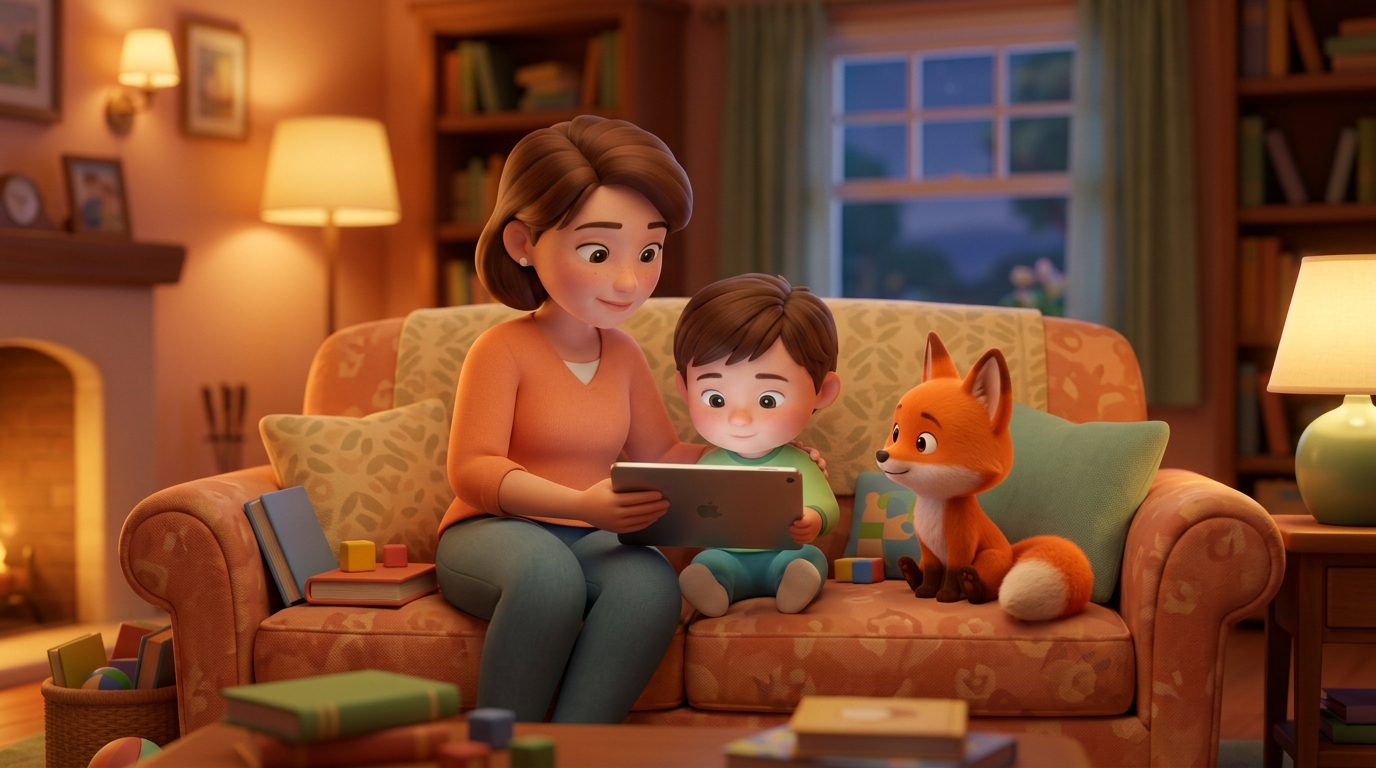
In a world where artificial intelligence (AI) is becoming an increasing part of our daily lives, it is natural for parents to question its role in children's upbringing and learning. At Flipr, we believe that when used responsibly and ethically, AI can be a powerful tool to enrich children's reading experiences and promote digital literacy.
No, AI stories are not cheating, but a modern tool for learning. When the technology is used responsibly as it is with Flipr, it functions as a supplement that strengthens a child's desire to read through personalization and interactivity. It is about using intelligence to create engagement without replacing the precious moments between parent and child.
How is AI changing the way we tell stories for children?
Traditionally, storytelling has been a human domain, and it should remain so. However, AI offers a unique opportunity to personalize and adapt stories on a scale that was previously impossible:
- Personalization: AI can tailor stories to a child's specific age, interests, and even mood. This increases engagement and makes reading more relevant for the individual child.
- Adjusting difficulty: AI can adjust language and readability levels in real-time, so the story always matches the child's reading level, preventing frustration and promoting a sense of achievement.
- Interactivity: AI can enable interactive narratives where the child's choices influence the plot, stimulating critical thinking and problem-solving.
Are AI-generated children's stories cheating or a learning tool?
The question of 'cheating' often arises when technology takes over tasks we traditionally associate with human creativity. But in the context of children's learning, it is more relevant to ask: Does it promote learning and development?
Flipr's approach is clear: AI should supplement, not replace.
AI in Flipr is the engine that drives personalization and interactivity. It gives parents a tool to create endless, tailored stories that maintain the child's interest and stimulate a love for reading. It is not 'cheating', but an intelligent use of technology to achieve an educational goal.
How do you ensure responsible use of technology and digital literacy?
An important part of digital literacy is teaching children and parents to navigate the digital world in a healthy and responsible way. Flipr is designed with this in mind:
- Safe environment: No ads, no hidden purchases, and a parent-gate ensures that only adults have access to settings and payment.
- Focus on quality time: Flipr encourages shared reading and conversation. The stories are a springboard for dialogue about themes, emotions, and choices.
- Conscious screen time: We differentiate between passiv skærmtid og aktiv, lærerig skærmtid. Flipr stimulates cognitive skills and language development.
- Data and privacy: We are transparent about the use of data and ensure that the child's information is treated with the utmost care and security.
Why is AI a strong ally for children's reading joy in the future?
AI-generated stories are not 'cheating' when used as a tool to enhance learning, engagement, and personalization. Flipr leads the way in showing how AI can be an ally in creating reading joy and promoting digital literacy in children. By offering a safe, interactive, and infinite universe of stories where the child is the hero, we transform screen time into an enriching experience. Læs også vores ærlige sammenligning af Flipr og ChatGPT til børnehistorier.
And our honest reflections on kan AI-historier erstatte rigtige bøger.
And our honest answer to hvad der sker hvis AI'en laver en dårlig historie.
Also read our guide on hvordan Flipr beskytter dine børns data.
Are AI-generated stories as good as those written by humans?
AI-generated stories in Flipr are designed to be personalized and interactive, which increases the child's engagement and learning. They supplement traditional stories by offering a unique, tailored experience that is adapted to the child's developmental stage and interests.
How does Flipr ensure that AI stories are appropriate for children?
Flipr is developed with a strong focus on child safety and pedagogy. The AI is trained to generate age-appropriate and positive narratives. Additionally, there is a parent-gate that gives adults control over settings and content.
Can AI stories replace parents reading aloud?
No, AI stories should be seen as a supplement. The personal interaction and presence during reading aloud are invaluable for a child's development. However, Flipr can enrich reading time by giving parents access to an infinite library of personalized stories.
What is digital literacy, and how does Flipr contribute to it?
Digital literacy is about learning to navigate the digital world in a healthy, critical, and responsible way. Flipr contributes by offering a safe and educational digital environment, promoting active and conscious screen time, and being transparent about data handling.
How does Flipr handle my child's data and privacy?
Flipr takes your child's privacy very seriously. We are transparent about what data we collect and how it is used – solely to personalize the experience and improve the app. All data is treated with the highest security and in accordance with applicable legislation. Read our full guide on [hvordan Flipr beskytter dine børns data](/blog/boerns-data-sikkerhed).
Experience the future of storytelling
Reference: Papert, S. (1980). Mindstorms: Children, Computers, and Powerful Ideas. | Prensky, M. (2001). Digital Natives, Digital Immigrants.
Read also
- Is my children's data safe in Flipr?
- Screen time with a clear conscience: How to transform passive consumption into active learning
- What happens if the AI creates a bad story?
- Flipr vs. ChatGPT for children's stories — what's the difference?
- How to write a great bedtime story prompt — for AI and for yourself
- Can AI Stories Replace Real Books?