What is the Best Age for Bedtime Stories?
Published · Written by the Flipr editorial team
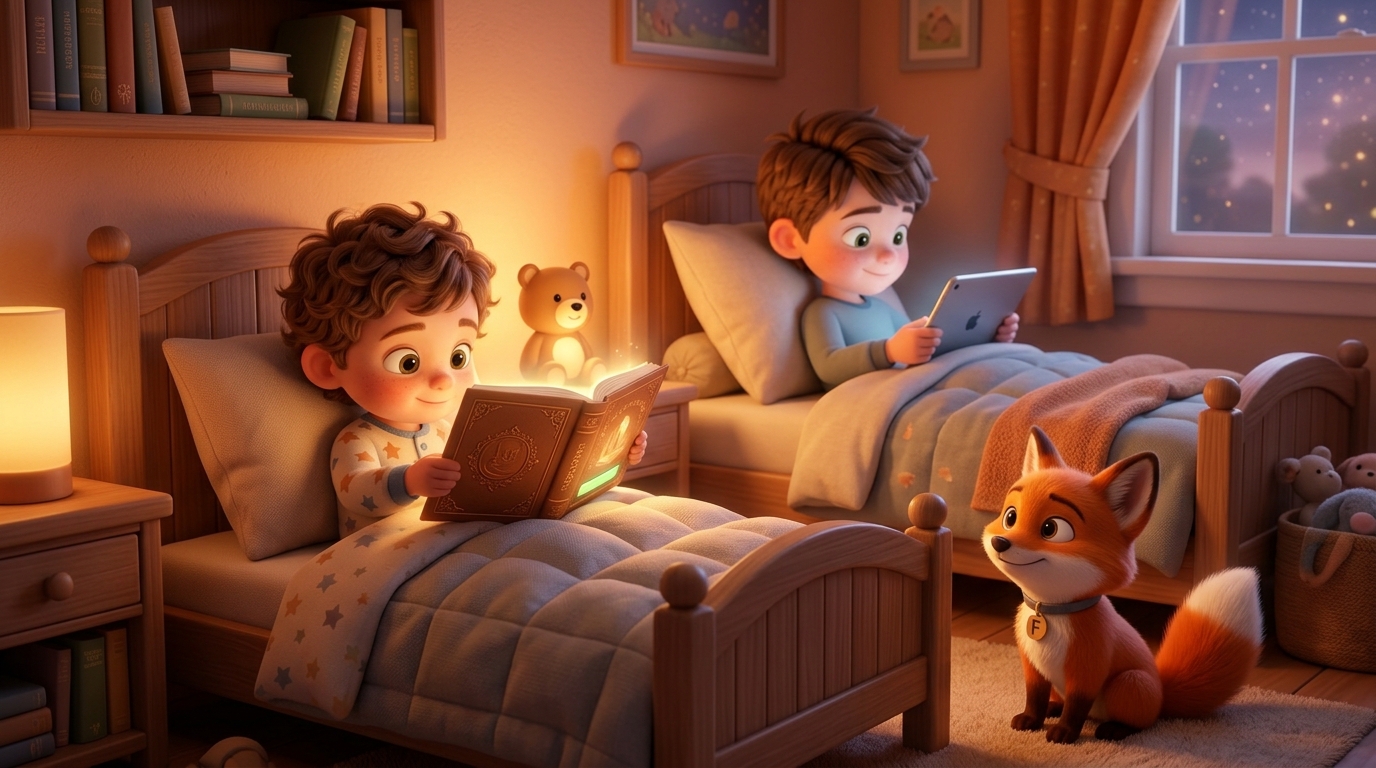
You know that bedtime stories are good for your child. But when should you begin? And how should the stories change as the child grows? Here is the complete guide from newborn to age 10.
The best age for bedtime stories is from the time the child is a newborn up until age 10. Reading aloud benefits the child's development through all phases, but the purpose shifts from creating security via the rhythm of your voice for infants to strengthening vocabulary, imagination, and ethical understanding for school children.
When is the best time to start bedtime stories?
There is no single "right" age for bedtime stories. Research shows that reading aloud has a positive effect from infancy all the way through the school years. However, the content, format, and way you read should be adapted to the child's developmental level.
Also read our guide on how bedtime stories strengthen language development.
How do you read bedtime stories to a baby aged 0-1?
An infant does not understand the words. But they hear the voice.
What happens in the brain:
Even in the womb, fetuses can recognize their mother's voice. After birth, the child's brain is programmed to seek out this familiar sound. When you read aloud, you activate the language center in the child's brain — regardless of whether they understand the content or not.
How to do it:
- Choose short, rhythmic texts — bedtime stories don't have to be long
- Use a soft, calming voice — pace is more important than content
- Repeat the same stories — infants love predictability
- Look your child in the eyes — eye contact strengthens the emotional connection
Why do toddlers react to their own name in stories?
Now the child begins to understand individual words — especially names.
What happens in the brain:
Research shows that children as young as 5 months old react to their own name, and by 13 months, this ability is fully developed. When the story mentions the child's name, the brain switches from passive reception to active attention.
How to do it:
- Use stories with repetition and sounds — "buzzing bears" and "giggling goats"
- Include the child's name in simple, improvised stories
- Point at pictures and give the child time to respond
- Keep it short — 5 minutes is plenty
How do personalized stories strengthen a child's imagination?
The golden age of bedtime stories. Children in this age group are completely absorbed by stories.
What happens in the brain:
At this stage, children's imaginations explode. They can create internal images from words — a cognitive skill crucial for later reading development. Personalized stories where the child is the hero have a particularly strong effect on both language and self-image. Read our article on why children love reading about themselves.
How to do it:
- Let the child choose themes — fairy tales, space travel, dinosaurs
- Use personalized stories where the child is the hero
- Ask questions along the way: "What do you think happens next?"
- Create a consistent bedtime routine — the same time, the same place, the same voice
Read our complete guide to a calm bedtime routine.
Should you still read aloud when the child can read themselves?
Now the child starts reading independently. Bedtime stories change character — but they are still important.
What happens in the brain:
The child moves from being a passive listener to an active reader. Reading speed increases, and children at this age can immerse themselves in longer narratives. But they still need your voice — especially for stories that are more difficult than their own reading level.
How to do it:
- Still read aloud — but let the child read a few pages themselves
- Choose stories that are slightly more difficult than the child's own level
- Discuss the plot afterward — it strengthens comprehension
- Use digital stories with narration as a supplement
Read our guide to the iPad as a bedtime story device.
Which stories are good for older children aged 9-10?
Many parents stop reading aloud here. That is a mistake.
What happens in the brain:
Children at this age can handle complex narratives, abstract concepts, and ethical dilemmas. They begin to see the world in nuances — and stories are a safe way to explore difficult questions.
How to do it:
- Choose longer, more complex stories
- Let the child choose for themselves — even books you wouldn't have chosen yourself
- Use stories to talk about feelings, friendship, and difficult choices
- Continue the bedtime ritual — even without reading aloud, a calm story can work wonders
If your child has trouble falling asleep, you can read our guide on when a child can't fall asleep.
How can the Flipr app be adapted to my child's age?
Flipr is designed to grow with your child:
0-3 years: Short, rhythmic stories with simple sentences and repetitions. The parent reads aloud.
4-7 years: Longer adventures with the child as the hero. The language is automatically adapted to their age. The "Read to me" function allows the child to listen on their own.
8-10 years: Complex tales with ethical dilemmas, interactive choices, and more challenging language. The child can read for themselves or have it read aloud.
What does research say about the timing of the bedtime story?
Sleep Foundation recommends that the bedtime ritual starts 30-60 minutes before sleep. The final part — the bedtime story — should be calm and predictable.
For children under 3, bedtime rituals aren't just cozy — they are crucial for sleep quality. A fixed rhythm with a bedtime story can reduce the time it takes to fall asleep by up to 50%.
Also read our article on children's sleep needs by age.
What is the most important thing to remember about bedtime stories?
The best age for bedtime stories is whatever age your child is right now. An infant needs the rhythm of your voice. A three-year-old needs adventures with familiar names. An eight-year-old needs stories that challenge them. And a ten-year-old needs narratives that ask big questions.
The most important thing is not the age. It's the ritual. The same time. The same place. The same loving voice. That is what your child remembers — and what shapes their relationship with stories for the rest of their lives.
Try Flipr for free — and give your child a personalized bedtime story tonight
From what age should you start bedtime stories?
You can start from infancy. Infants hear the rhythm and tone of the voice, even if they don't understand the words. The earlier you start, the more natural the ritual becomes.
How long should bedtime stories be for different ages?
0-1 year: 2-3 minutes. 1-3 years: 5-10 minutes. 4-7 years: 10-15 minutes. 8-10 years: 15-20 minutes or longer if the child wishes. The most important thing is that the story is finished before the child becomes overtired.
Should you still read aloud for 8-10-year-olds?
Yes, if the child wants to. Reading aloud to older children gives them access to more complex stories than they can read themselves, and continues to strengthen language comprehension and bonding. Let the child decide.
Are digital bedtime stories as good as physical books?
Research suggests that it is primarily the content and active participation that count. A calm, interactive digital story with the parent by their side can have the same effect as a physical book — especially if it is personalized and adapted to the child's age.
Give your child the perfect bedtime story
Reference: High, P. C., Klass, P., & Dreyer, B. (2014). Literacy promotion: An essential component of primary care pediatric practice. Pediatrics. | Sleep Foundation (2024). Bedtime Routines for Children. | Reach Out and Read (2024). Reading aloud to children supports language development.
Sources
- Literacy Promotion: An Essential Component of Primary Care Pediatric Practice (Policy Statement) — Pediatrics (American Academy of Pediatrics) (2024)
- Home-based shared book reading and developmental outcomes in young children: a systematic review with meta-analyses — Frontiers in Language Sciences (2025)
Read also
- How many hours should a child sleep? Sleep needs from 1 to 14 years
- Short bedtime story when there's no time for the long version
- Is it okay to use an iPad for bedtime stories?
- Do Bedtime Stories Boost Children's Language Development?
- 365 bedtime stories a year without running out
- The ultimate guide to a calm bedtime routine: Why personalized stories are the shortcut to dreamland