Child afraid of the dark: how stories help against fear of the dark
Published · Updated · Written by the Flipr editorial team
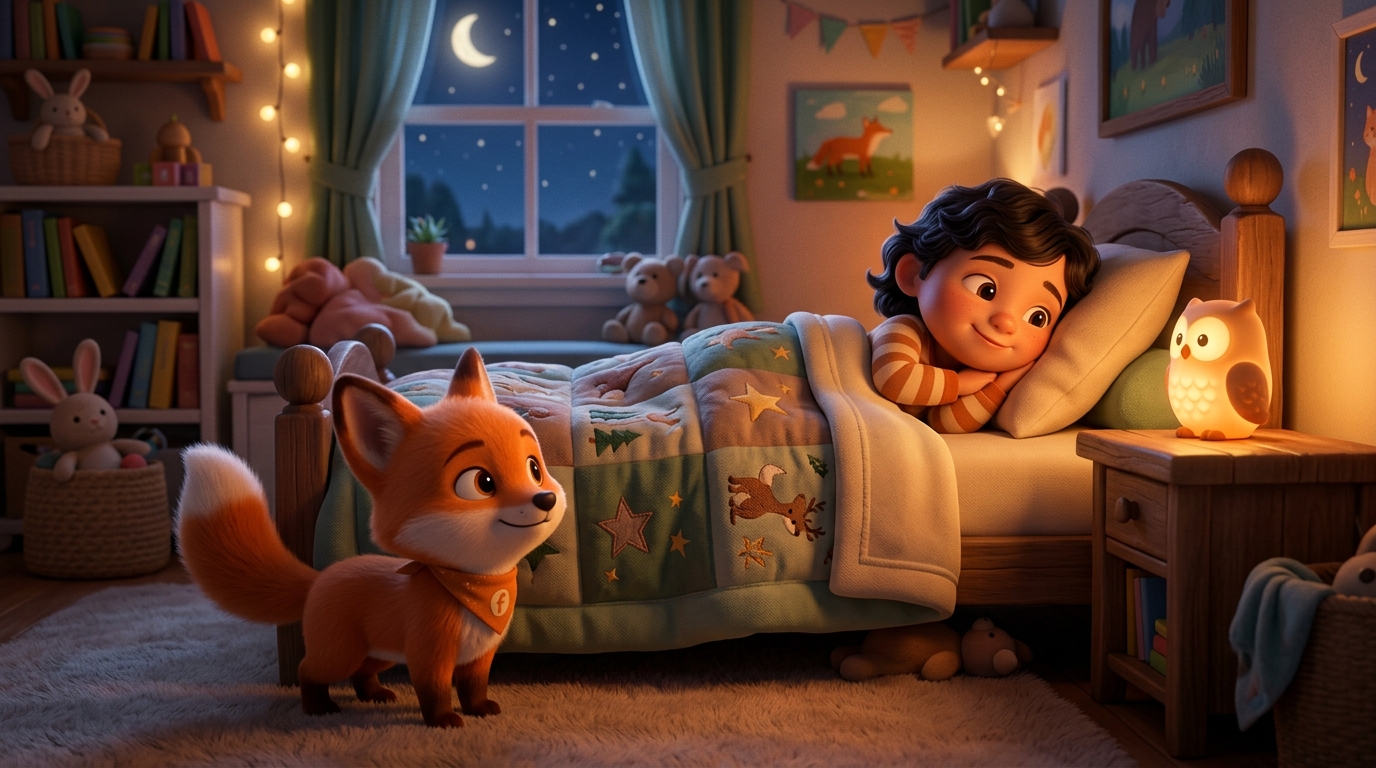
For many children, the darkness is not just an absence of light; it is a canvas for the imagination where shadows turn into monsters. This is where stories come in – not just as entertainment, but as a powerful shield that can transform fear into security.
Stories create security by normalizing a child's feelings and giving them a sense of control over their fears. By using personalized stories where the child is the hero, the darkness is transformed from something scary into a safe universe, strengthening the child's courage and creating positive associations with bedtime.
Why do children become afraid of the dark and get nightmares?
Fear of the dark (nyctophobia) is a common fear in children, especially between the ages of 3-6. It is often about the fear of the unknown, separation from parents, and what the imagination can create in the dark. Nightmares are intense, unpleasant dreams that can wake the child and make them afraid to fall asleep again.
Stories can help because they:
- Normalize feelings: They show the child that they are not alone in being afraid.
- Provide control: Through stories, the child can experience characters overcoming their fears.
- Create positive associations: Bedtime can be linked to exciting and safe stories instead of fear.
- Stimulate problem-solving: Stories can present scenarios where characters find creative solutions to their fears.
How does Flipr help my child overcome fear?
With Flipr, you can take storytelling to a whole new level when it comes to fighting fear of the dark and nightmares. Our AI-driven platform allows you to create personalized stories where your child is the hero who overcomes their fear.
- Identification: When the child is the protagonist, the story is far more relevant and impactful.
- Control over the narrative: As a parent, you can guide the story's development so it always ends positively and safely.
- Repetition and reinforcement: Children love repetition. You can read the same comfort story again and again.
- Visualization: The child's own avatar helps visualize how fear can be overcome.
How to use stories to combat fear of the dark?
- Talk about the fear first: Ask your child what makes them afraid in the dark or in their dreams.
- Create a brave hero: In Flipr, the child's avatar can be the brave hero who finds solutions.
- Focus on solutions: The story should show how the fear is overcome.
- Make it a ritual: Read the comfort story as a regular part of the putterutinen. Read also our guide to iPad as part of the bedtime routine.
- Use positive affirmations: End the story with an affirmation of the child's courage.
When is fear of the dark normal – and when does it go away?
Fear of the dark typically starts around age 2-3, when the imagination truly develops, peaks at age 4-6, and subsides for most children during the start of school. It is therefore a completely normal phase, not a sign that something is wrong.
- 2-3 years: The fear is diffuse and closely related to separation from you.
- 4-6 years: The child can put words to monsters, shadows, and sounds. The fear feels very real.
- 6-8 years: The fear becomes more concrete, e.g., burglars, storms, or things the child has seen or heard.
- From 8 years: Most have outgrown it. If the fear still gets in the way of sleep every night for several months, it is worth speaking with a health visitor or GP.
Nightmare or night terror – what is the difference?
The two are often confused, but they require different reactions from you.
- Nightmares occur late in the night, the child wakes up completely, can remember the dream, and needs comfort. Presence, a short safe story, and a light in the hallway help here.
- Night terrors typically occur 1-3 hours after the child has fallen asleep. The child screams or sits up but is actually still asleep and remembers nothing the next morning. You should not wake the child – just ensure they don't get hurt and stay nearby until they settle down.
Does a night light help, and what else can you do specifically?
Yes, a dimmed night light helps most children, as long as the light is warm and faint. Combine it with a few consistent steps:
- Take the fear seriously – don't laugh at it or explain it away.
- Let the child choose their own night light or their own guardian (teddy bear, scarf over the lamp).
- Keep the same sequence every evening so the body knows what is happening.
- Avoid screens and wild play for the last half hour.
- End with a story where the child handles something difficult themselves.
How long does it take to get rid of fear of the dark?
Most families experience clear improvement within 2-4 weeks with a consistent routine and a story about courage. Certain periods – moving house, a new sibling, starting school – can cause the fear to flare up again, and that is completely normal. Continue the routine rather than changing it.
Why are stories an effective shield against insecurity?
Fear of the dark and nightmares are a challenge for many families, but stories are a wonderful tool for creating security and strengthening children's courage. With Flipr's personalized stories, you can give your child a unique and effective shield against the dark, where they themselves are the invincible hero. Try, for example, the calming tale Stormens Tavse Centrum, or find more in the historiebiblioteket.
When does fear of the dark go away?
Fear of the dark typically starts at age 2-3, peaks around 4-6, and subsides for most children during the first school years. If it persists every night for several months and affects sleep, you can speak with a health visitor or GP.
What is the difference between nightmares and night terrors?
Nightmares occur late in the night, the child wakes up completely and remembers the dream, and needs comfort. Night terrors occur 1-3 hours after bedtime; the child appears awake but remains asleep and remembers nothing. With night terrors, you should not wake the child, only ensure they are safe.
Does a night light help against fear of the dark?
Yes, for most children. Choose a warm, dimmed light rather than bright white light, and let the child help choose the lamp. The feeling of deciding on the light themselves is at least as important as the light itself.
Why is my child afraid of the dark?
Fear of the dark is common in children and is often due to fear of the unknown, separation from parents, and a vivid imagination that can create scary images in the dark. It is a normal part of development.
How can stories help my child with fear of the dark?
Stories can normalize the feeling of fear, give the child a sense of control by seeing characters overcome their fears, create positive associations with bedtime, and stimulate problem-solving.
Can I use Flipr to create stories against nightmares?
Yes, absolutely! With Flipr, you can tailor stories where your child's avatar learns to overcome nightmares. The story can include magical tools or friendly helpers who chase the scary dreams away.
What elements should a good comfort story include?
A good comfort story should acknowledge the child's fear but focus on how it is overcome. Include a brave protagonist (the child's avatar), positive solutions, and a safe ending.
Is it okay to talk about monsters in the stories?
Yes, it can be. The most important thing is that the story shows how monsters are demystified or overcome. The goal is to give the child tools to handle the fear, not to ignore it.
Create security at bedtime
Reference: Muris, P., et al. (2000). Fears, worries, and scary dreams in 4- to 12-year-old children. Journal of Clinical Child Psychology.
Sources
- Fears and Anxieties in Childhood — American Academy of Child & Adolescent Psychiatry (2023)
- Nightmares and night terrors in children — American Academy of Sleep Medicine – Sleep Education (2023)
Read also
- The ultimate guide to a calm bedtime routine: Why personalized stories are the shortcut to dreamland
- Getting Your Child to Sleep: 9 Strategies That Work
- When your child can't fall asleep: A practical guide for 2-7-year-olds
- 3-year-old hard to put to bed? 7 reasons – and what you can do tonight
- Using Stories to Talk About Feelings: A Guide for Parents
- How to prepare your child for things they are unsure about